Behind the Scenes: Documenting Brixton Windmill with Aerial Gaussian Splats
A detailed look at how I created an interactive 3D model of London's last working windmill using drone-based Gaussian splatting. From aerial capture planning to web-optimised delivery, here's what goes into professional heritage documentation.
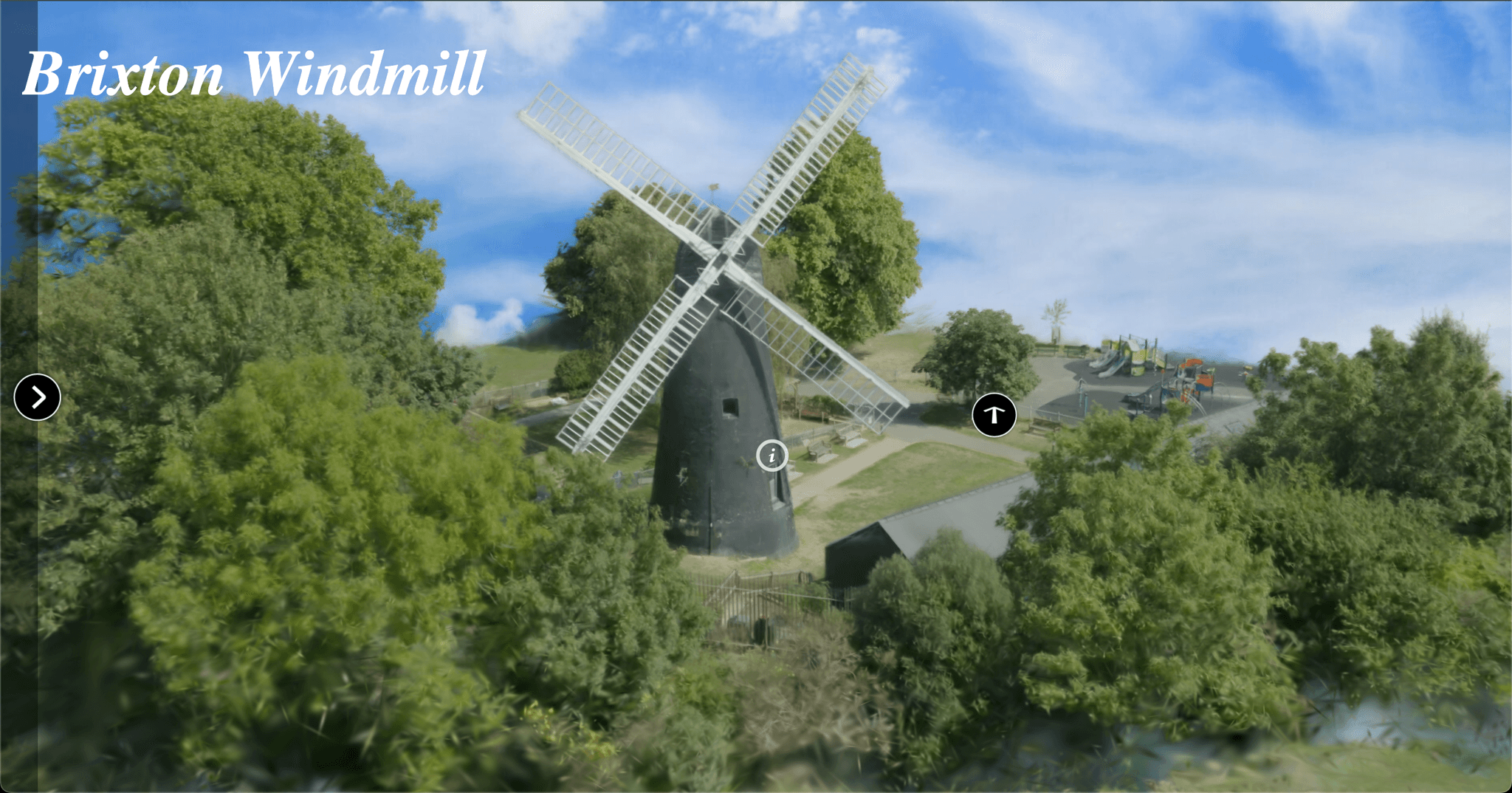

When I first spotted Brixton Windmill rising above Windmill Gardens on Brixton Hill, I knew this Grade II* listed structure would make a compelling 3D documentation project. Built in 1816 and standing as London's last working windmill, it represents over 200 years of milling history – from the Ashby family's wind-powered flour production to today's volunteer millers grinding organic wholemeal flour.
This case study walks through the complete process of creating an aerial Gaussian splat model of the windmill's exterior, from initial drone planning to the final web-based interactive viewer. Whether you're considering heritage documentation for your own site or simply curious about modern 3D capture techniques, this behind-the-scenes look should prove illuminating.
Why Brixton Windmill?
Beyond being London's only surviving inner-city windmill, Brixton Windmill presented several characteristics that made it an ideal candidate for aerial 3D documentation:
- Historical significance – A rare surviving tower mill with over two centuries of continuous history
- Public access limitations – Open only second weekends monthly (March-October), restricting visitor numbers
- Conservation importance – Restored in 2010-11 after being on Heritage at Risk Register
- Architectural complexity – Traditional sails, weatherboarding, and machinery offering rich documentation opportunities
- Urban context – A rural relic surrounded by Victorian housing, telling a story of London's development
The windmill sits in Windmill Gardens off Blenheim Gardens, making aerial drone access straightforward while ground-based photography would struggle to capture the complete structure from optimal angles.
Pre-Project Planning and Research
Before any drone launched, I spent time researching the windmill's history and structural details. Understanding what you're documenting isn't just about creating visually impressive models – it's about capturing what matters historically and architecturally.
Key preparation included:
- Studying the Ashby family's 117-year milling operation (1817-1934)
- Understanding the windmill's architectural evolution – wind-powered until 1862, then steam, then gas-powered modular mill
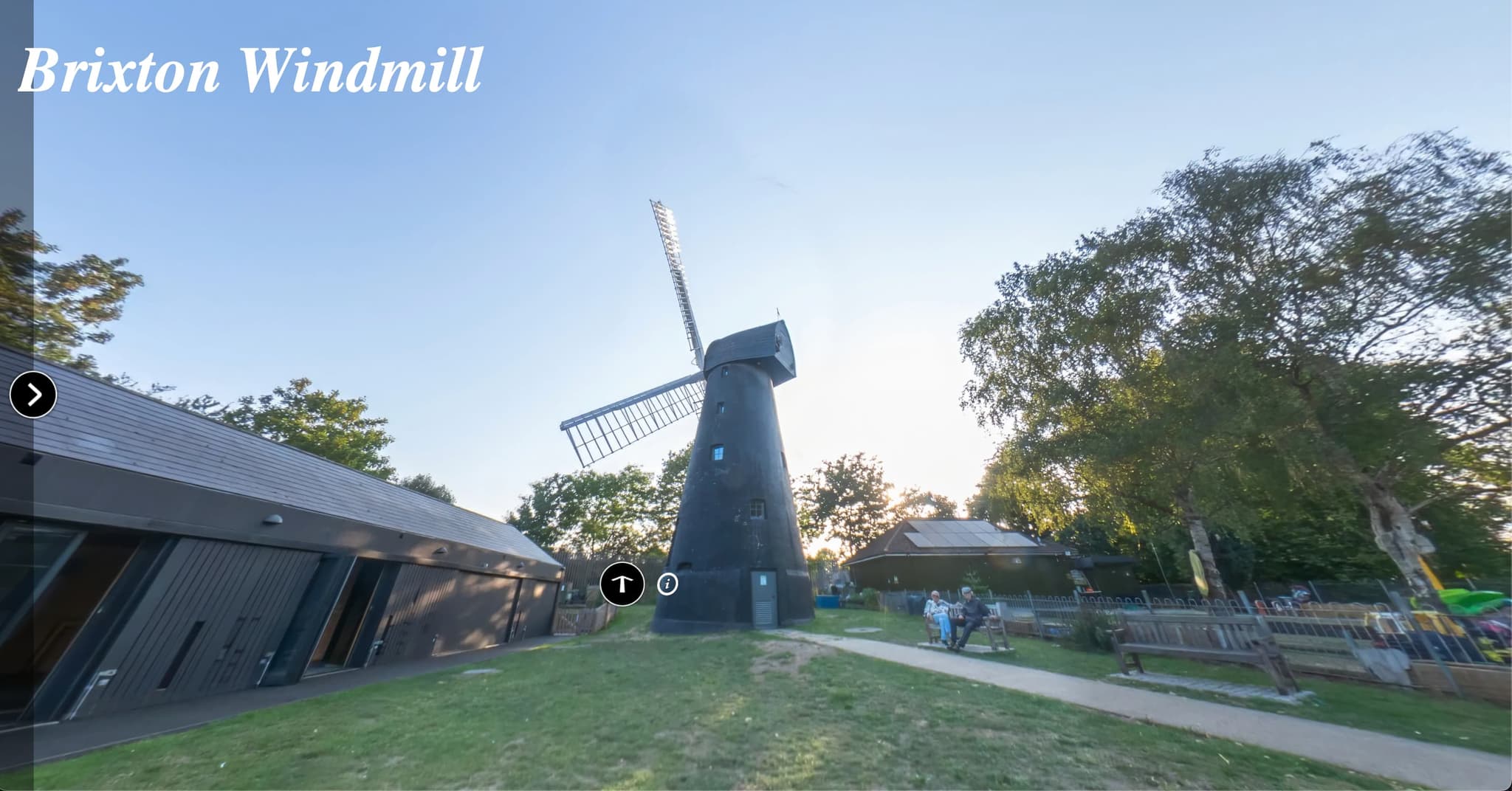
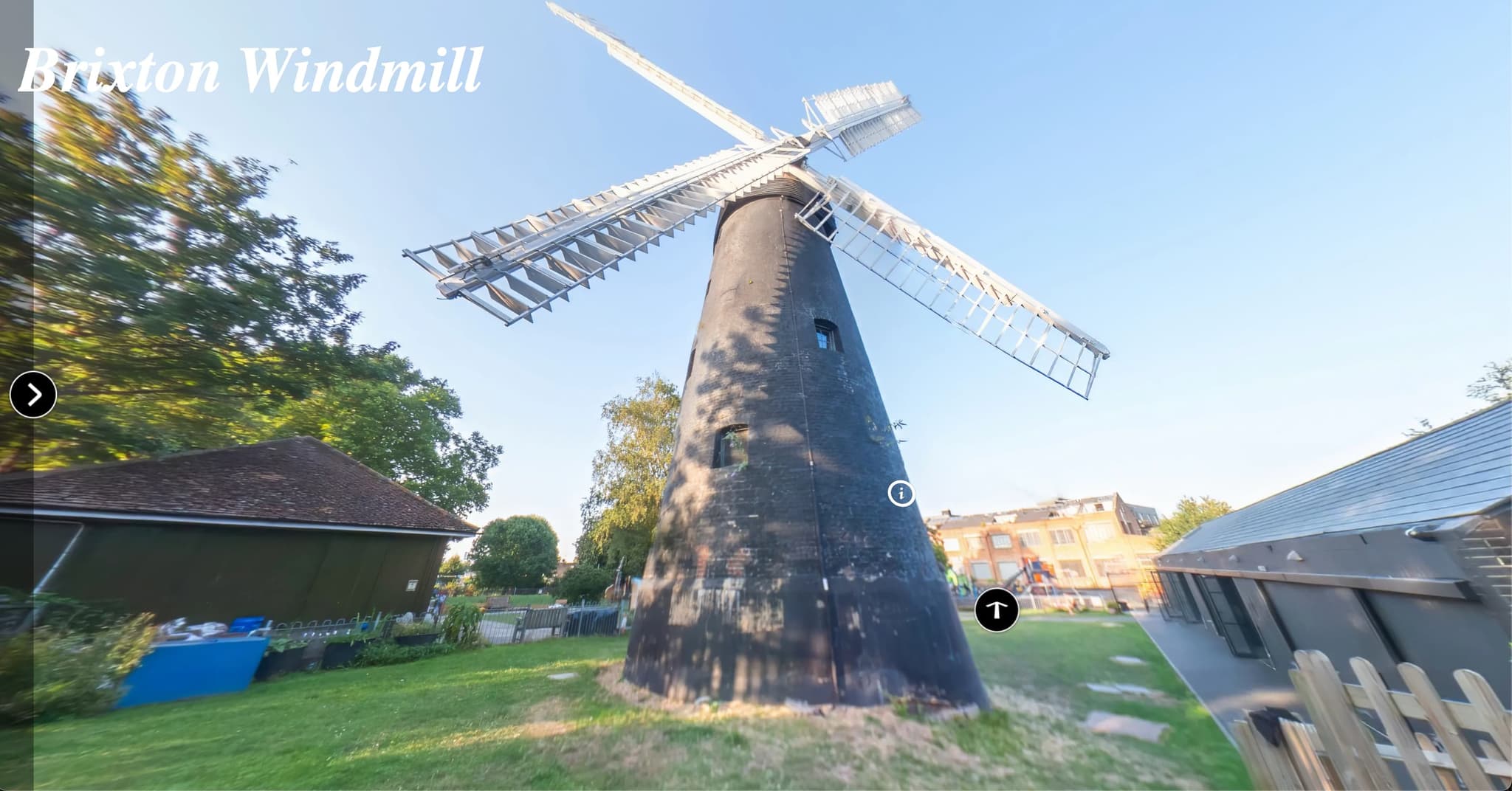
- Identifying significant features: pair of common sails, pair of spring sails, weatherboarding, boat-shaped cap
- Researching the 2010-11 restoration to understand what's original versus reconstructed
- Planning drone flight paths for complete coverage without CAA airspace violations
The windmill's location in South London required checking for nearby airports (Heathrow, City), helicopter routes, and ensuring flight operations stayed within legal parameters for commercial drone work.
Historical Context
When Brixton Windmill was built in 1816, Brixton Hill was still open agricultural fields. By the 1850s, urban development had encroached so severely that the wind couldn't reach the sails effectively – one reason the Ashbys moved operations to a watermill on the River Wandle in 1862. This urban transformation is visible in the aerial documentation.
Documentation Day: Aerial Capture
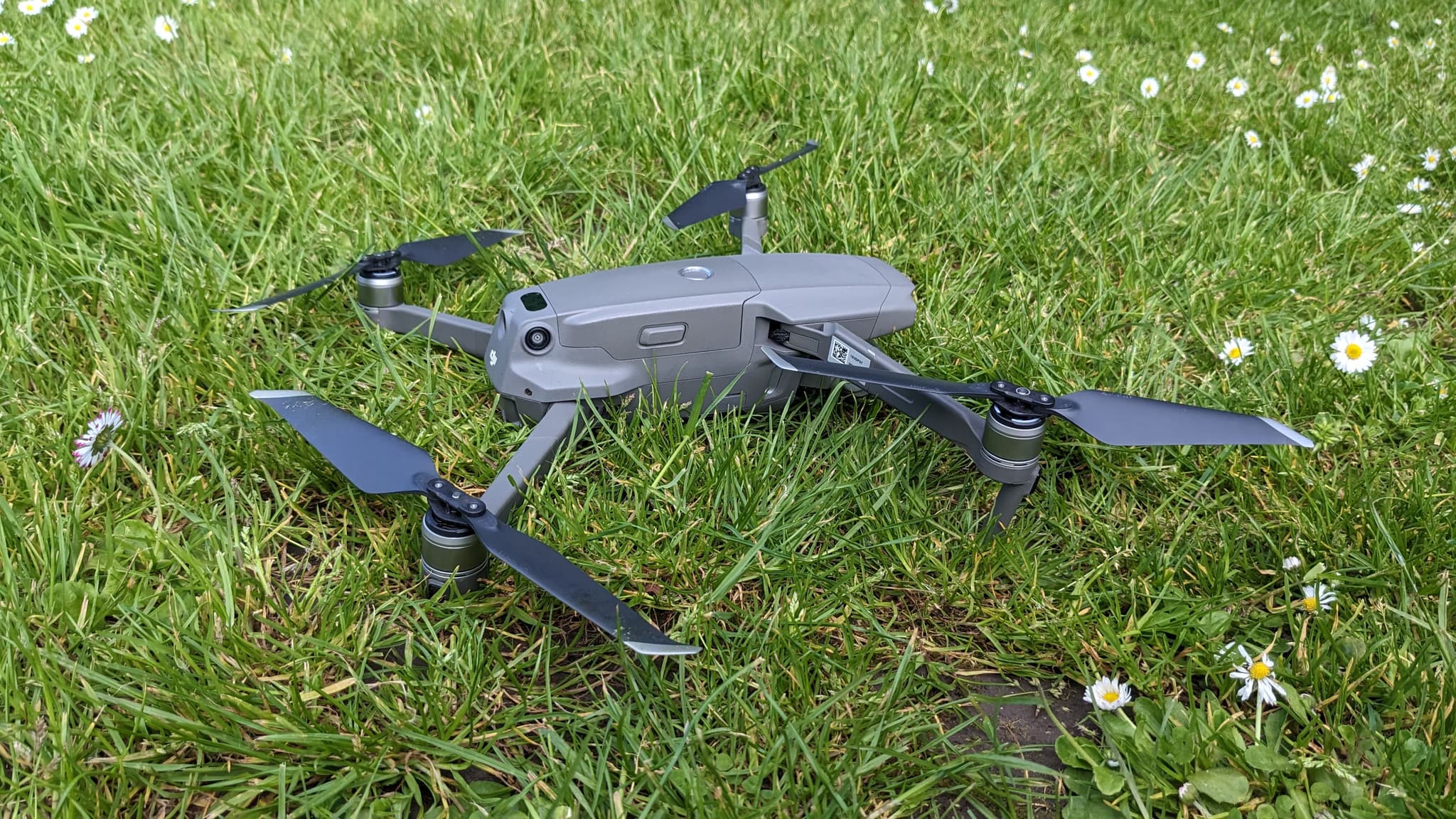
Using a DJI Mavic 2 Pro drone equipped with a Hasselblad 1-inch CMOS sensor capable of 20MP captures, I flew multiple orbital passes around the windmill. The systematic approach ensured complete coverage from all angles and elevations.
Flight Planning Strategy
Rather than random drone movements, I planned precise orbital passes:
- Low orbit (10-15m altitude) – Capturing base details, weatherboarding texture, ground-level context
- Mid orbit (20-25m altitude) – Main structure, sails, cap mechanism, relationship to surrounding gardens
- High orbit (30-40m altitude) – Overall context, rooftop details, urban setting
Each orbit involved continuous image capture with substantial overlap (70-80%) to ensure the photogrammetry software had enough data points for accurate 3D reconstruction.
Weather and Lighting
Timing the capture for optimal conditions was crucial. I chose an overcast morning with:
- Even, diffuse lighting (no harsh shadows from direct sunlight)
- Light winds (stable drone flight, minimal sail movement)
- Good visibility (clear air, no haze)
- Dry conditions (no rain interfering with equipment)
The overcast sky acted as a giant softbox, revealing texture in the weatherboarding and architectural details without the harsh contrast that bright sun would create.
From Drone Footage to Gaussian Splat
Once aerial capture was complete, the real technical work began. Several hundred drone images needed processing into a photorealistic 3D model optimised for web delivery.
Step 1: Gaussian Splat Processing with Kiri Engine
I processed the drone imagery through Kiri Engine, which specialises in creating Gaussian splat reconstructions. Unlike traditional mesh-based photogrammetry (which creates polygon surfaces), Gaussian splatting represents the scene as millions of 3D Gaussian distributions – essentially cloud-like points that render photorealistically.
Advantages for heritage documentation:
- Photorealistic quality – Preserves texture, weathering, and material authenticity
- Efficient file sizes – Smaller than traditional mesh+texture models
- Fast web rendering – Real-time performance even on mobile devices
- Authentic appearance – Captures subtle details like paint deterioration and wood grain
Step 2: Refinement with Supersplat
The raw Gaussian splat output required optimisation for web delivery. Using Supersplat, I refined the model by:
- Removing floating artifacts from moving objects (birds, tree branches)
- Cleaning up reconstruction noise in challenging areas
- Optimising splat density for performance vs quality balance
- Ensuring colour accuracy across all viewing angles
Step 3: Interactive Viewer with 3DVista Pro
The final step involved creating a web-based viewer using 3DVista Pro tour builder software. This allowed users to orbit freely around the windmill, exploring architectural details from any perspective.
Key features implemented:
- Intuitive navigation – Click-and-drag orbital controls
- Mobile optimisation – Touch-friendly interface for tablets and phones
- Performance tuning – Smooth 60fps rendering on standard hardware
- Embeddable viewer – Can be integrated into heritage organisation websites
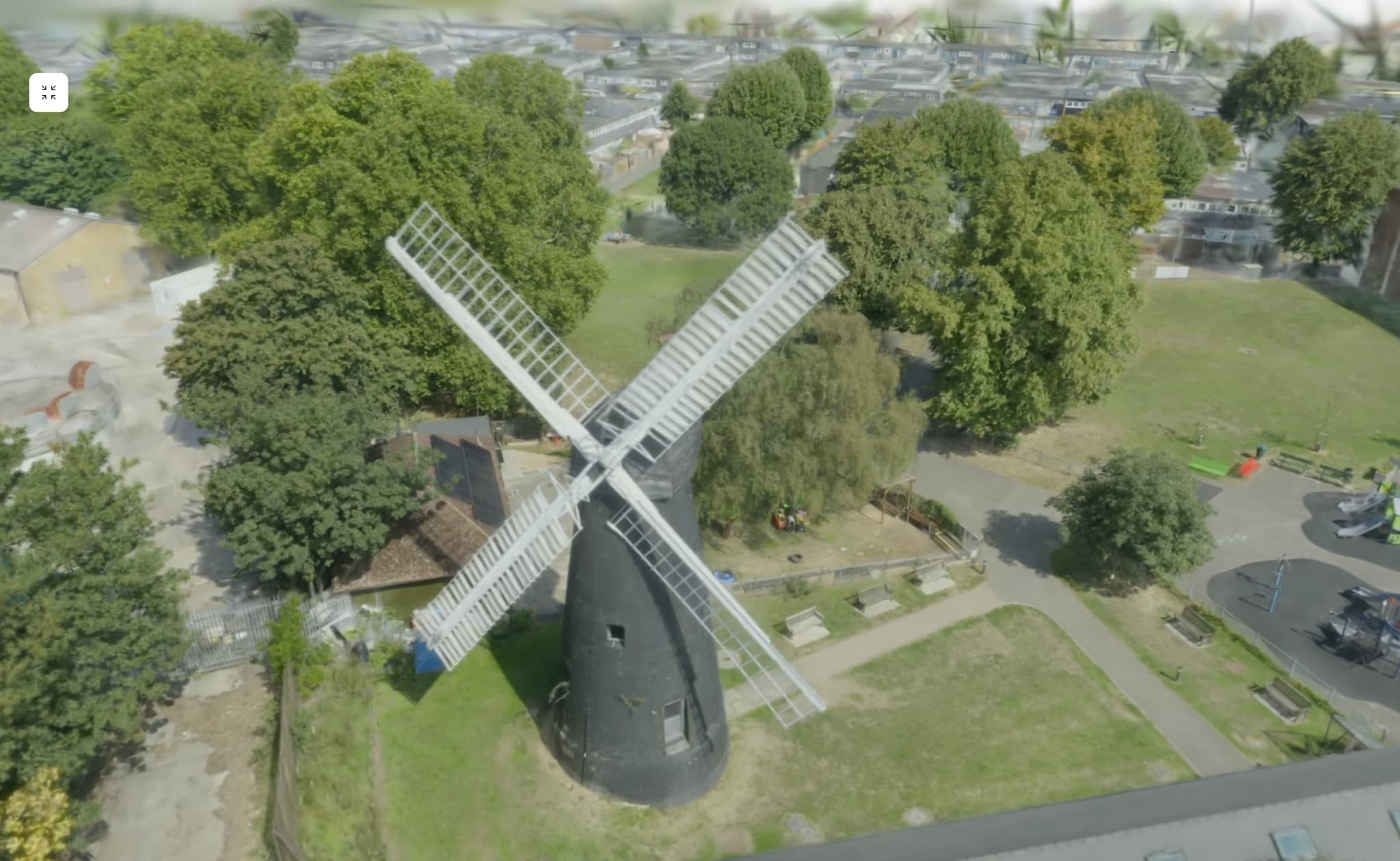
Technical Challenges and Solutions
No heritage documentation project proceeds without obstacles. Here are challenges encountered and how I addressed them:
Challenge 1: Sails Creating Motion Blur
Even in light wind, the windmill sails occasionally moved during capture, creating potential motion blur in images.
Solution: Shot at 1/1000s shutter speed or faster to freeze any movement. Discarded images showing sail blur during processing review.
Challenge 2: Surrounding Victorian Buildings
Dense housing around the windmill meant background elements could interfere with processing or distract from the primary subject.
Solution: During Supersplat refinement, selectively reduced splat density for background elements while maintaining windmill detail. This creates natural focus on the heritage structure.
Challenge 3: File Size for Web Delivery
High-quality Gaussian splats can be large files, problematic for users with slower internet connections.
Solution: Gaussian splatting inherently creates smaller files than traditional mesh approaches. Further optimisation using Supersplat's compression tools achieved a balance between quality and accessibility.
The Final Deliverables
The completed Brixton Windmill aerial documentation provides multiple benefits:
- Digital preservation – Permanent record of the windmill's 2024 condition for conservation reference
- Accessibility – Anyone worldwide can explore the exterior without travelling to Brixton
- Education – Schools can study windmill architecture and milling history virtually
- Promotion – Compelling visual tool encouraging physical visits to the working windmill
- Research resource – Historians and architects can examine details remotely
Next Phase: Interior Documentation
The exterior Gaussian splat is complete, but the project continues. I'm currently working on interior 360° photography documentation using a Ricoh Theta Z1 camera to capture:
- The Derbyshire grit millstones on the stone floor
- The iron-clad modular mill (installed 1902, now electrically powered)
- Wind-powered machinery including the sack hoist and governor
- Architectural details across multiple floors
When complete, visitors will be able to explore both exterior and interior spaces in a seamless virtual tour, experiencing the complete story of London's last working windmill.
Technical Note: Why Gaussian Splats for Heritage
Traditional photogrammetry creates polygon meshes with texture maps. Gaussian splatting instead represents scenes as point clouds with directional colour information. For heritage documentation, this preserves authentic material appearance better – weathered wood looks genuinely weathered, not artificially textured. The photorealistic quality builds trust with conservation professionals and provides accurate visual records for future restoration work.
Lessons from Documenting Brixton Windmill
This project reinforced several principles about effective heritage documentation:
1. Research Informs Capture
Understanding the windmill's history – from Ashby family operations to urban encroachment forcing technological adaptation – shaped which features I prioritised during aerial capture. Historical knowledge creates better documentation.
2. Technology Serves Heritage Goals
The choice of Gaussian splatting over traditional mesh photogrammetry wasn't about technical novelty – it was about delivering photorealistic preservation records that serve conservation, education, and accessibility objectives effectively.
3. Context Matters
Documenting the windmill in its urban setting tells a richer story than isolating it. The surrounding Victorian housing illustrates why wind power became ineffective by the 1860s, necessitating steam and gas-powered alternatives.
4. Planning Prevents Problems
The hours spent planning drone flight paths, researching optimal weather conditions, and understanding CAA regulations meant capture day proceeded efficiently without unexpected complications.
The Future of Heritage Documentation
Brixton Windmill has stood for over 200 years, surviving urban development, wartime bombing, cycles of neglect and restoration. Now, through modern 3D documentation techniques, it can be experienced and studied by anyone with internet access, preserved digitally for future generations.
As aerial drones become more capable and Gaussian splatting technology matures, heritage documentation is becoming more accessible to organisations of all sizes. The tools that once required specialist conservation firms are now available to documentation professionals working directly with heritage sites.
For organisations considering similar projects, the process needn't be intimidating. With proper planning, respect for the site's significance, and the right technical approach, aerial 3D documentation creates lasting value – digital preservation, public engagement, and educational resources that serve communities for years to come.
Explore the Complete Project
View the interactive Brixton Windmill Gaussian splat viewer and see the finished result of this aerial documentation project.
View Windmill Project