Brixton Windmill Heritage Site
Exterior Gaussian Splat Documentation of London's Last Working Windmill
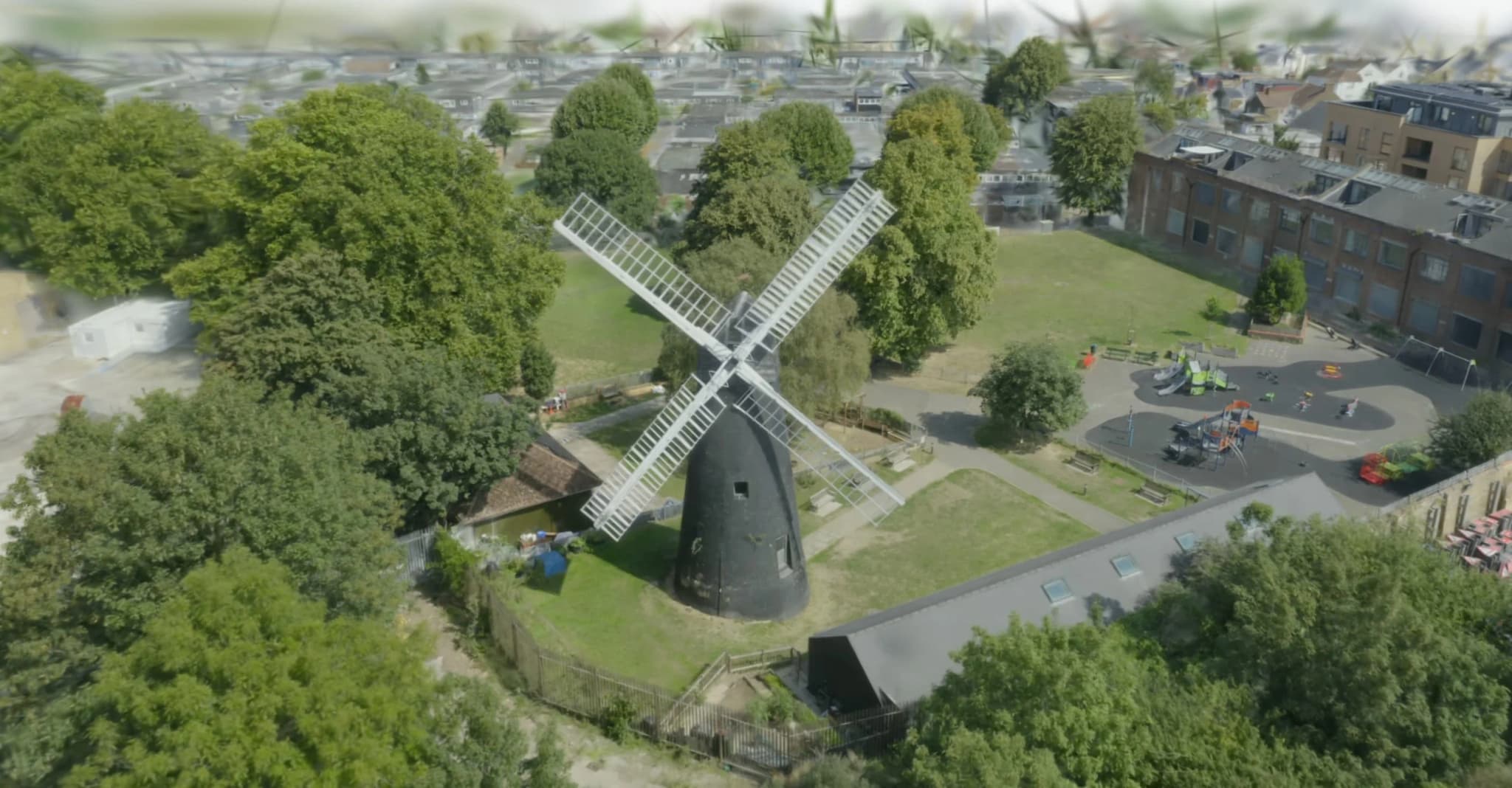
Grade II* Listed Heritage Site
Brixton Windmill stands as one of London's most significant industrial heritage sites - the last remaining windmill in the capital and one of only four Grade II* listed windmills in England. Built in 1816, it served the community for over a century as a working mill before being restored as a heritage site.
This project documents the windmill's exterior structure using cutting-edge Gaussian splatting technology, creating a highly detailed 3D model from aerial drone footage. The resulting interactive viewer allows users to explore the windmill from angles impossible to see in person, including detailed views of the upper structure and cap.
The documentation serves both heritage preservation and educational purposes, creating a permanent digital record of the windmill's current condition while making this iconic structure accessible to visitors worldwide.
The Technical Challenge
Documenting a tall vertical structure like a windmill presents unique challenges. Traditional ground-level photography can't capture the full architectural detail of the upper structure, sails, and cap. The windmill's prominent position in a public park also meant working within strict operational constraints.
The solution required aerial drone photography combined with Gaussian splatting - a modern approach that creates photorealistic 3D models from video footage. This technique was chosen over traditional photogrammetry for its ability to handle the smooth curves and repetitive patterns of the windmill's structure.
The Solution
Using a DJI Mavic 2 Pro, I captured comprehensive aerial video footage of the windmill from multiple angles and heights. The drone's stability and 4K video capability allowed for smooth, detailed captures even in typical London weather conditions.
The footage was processed using Gaussian splatting technology, generating over 400,000 individual 'splats' - point-based representations that create a photorealistic 3D model. This approach captures fine details like the texture of the weatherboarding, the structure of the sails, and the architectural elements of the cap.
The resulting 3D model was deployed as an interactive web viewer, allowing users to orbit around the windmill, zoom in on architectural details, and view the structure from aerial perspectives normally only accessible during drone flights.
Key Features
- 400,000+ Gaussian splats for photorealistic detail
- Full 360° orbital viewing capability
- Zoom functionality for architectural detail examination
- Aerial perspective views of upper structure and cap
- Web-based viewer compatible with all modern browsers
- Mobile-responsive 3D navigation
- Permanent digital heritage record
- Educational resource for architectural study
Results & Heritage Impact
The Gaussian splat viewer provides an unprecedented level of detail for public engagement with Brixton Windmill. Architectural historians and heritage enthusiasts can examine structural details that would normally require scaffolding access, while the general public can explore London's industrial heritage from their devices.
The project demonstrates how modern 3D capture techniques can make heritage sites more accessible while creating valuable documentation for conservation planning. The model serves as a baseline record of the windmill's condition, supporting future restoration and maintenance work.
Project Details
Technologies
Project Stats
Historical Significance
Brixton Windmill is the last windmill in inner London and one of only four Grade II* listed windmills in England. Built in 1816 by local entrepreneur Ashby, it operated commercially until 1934.
After decades of decline, the windmill was restored in the 1960s and again in 2011. It now operates as a heritage site and community hub, with the sails occasionally turning on special open days.